Watercolor Roses Bouquet Cliparts & Illustrations
I recently opened a new brief for a boutique skincare line launching next month. The client wanted something that felt organic, handcrafted, and deeply feminine without looking cliché. As I scrolled through my library of graphic design asset options, I stumbled upon the Watercolor Roses Bouquet Cliparts. Before I could commit to this direction for a real commercial project, I needed to put these files through a rigorous stress test. This is not just a product description; it is a practical review from a designer who needs to know if an asset will hold up under the pressure of a live brand identity.
First Impressions: Mood and Visual Texture
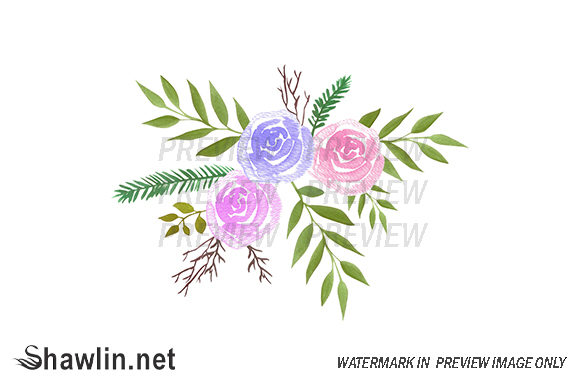
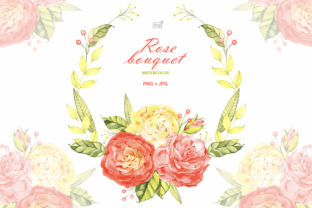
The moment I loaded the Watercolor Roses Bouquet Cliparts into my workspace, the visual mood was immediately established. These are not flat, vectorized shapes with hard edges. They possess the soft, bleeding texture that defines high-quality watercolor art. The petals show subtle gradients, and the brushstrokes feel authentic rather than digitally simulated. For a handmade business or a small brand trying to communicate warmth and care, this style hits the mark perfectly. It evokes a sense of nostalgia and elegance that aligns well with the "slow living" aesthetic currently dominating the creative marketplace.
However, as a professional, I always ask: does this look like a stock photo, or does it have enough character to be part of a unique brand identity? In this case, the variations in the bouquet arrangements provide enough flexibility. You can use a single stem for delicate accents or the full bouquet as a hero graphic. The color palette is versatile, allowing for easy recoloring if the client's brand guidelines demand specific hex codes, though the original hues are already quite sophisticated.
Performance in Real-World Design Scenarios
To determine the true value of these Illustrations, I tested them across several common deliverables. First, I placed a large version on a mockup for a product label. The way the watercolor texture interacts with the white space of the bottle label creates a premium feel. It works exceptionally well for packaging design where the goal is to make the product stand out on a shelf among competitors using bold, sans-serif typography.
Next, I explored its potential for print-on-demand items. I dragged the central rose cluster onto a t-shirt design template. The transparency of the PNG files allowed me to layer it over a script font without any awkward white boxes. This confirms its viability as a t-shirt design element. Similarly, when I tried it for a Cricut project, the clean edges of the PNG cutouts were precise enough for vinyl cutting, making it a dual-purpose asset for both digital and physical crafting.
For digital marketing, these assets shine in social media graphics. I created a few Instagram posts and Pinterest pins using the bouquets as framing elements. The soft edges draw the eye inward toward the text, improving visual hierarchy without overwhelming the message. They also serve beautifully as background textures for Canva templates intended for wedding planners or event coordinators.
Strategic Placement: Where to Use Boldly
If you decide to integrate Watercolor Roses Bouquet Cliparts into your workflow, there are specific areas where they perform best. Large layout areas are ideal. Using the full bouquet as a hero image on a landing page or the front of a brochure makes a strong statement. The detail in the petals holds up well at larger scales, ensuring the design feels rich and expensive.
They are also excellent for decorative accents. A small sprig of roses in the corner of an invitation or a website footer adds a touch of polish without demanding too much attention. For editorial design, such as blog headers or magazine covers, these illustrations provide a classic, romantic vibe that pairs well with serif fonts. If you are building a design bundle for a seasonal campaign, these flowers act as a cohesive thread tying together various materials like flyers, stickers, and email headers.
Cautions: Where to Exercise Restraint
Despite their versatility, there are scenarios where these clipart assets should be used carefully. Avoid using them in crowded layouts. Because watercolor has a lot of internal detail and texture, placing it against a busy background can create visual noise. The visual hierarchy may get lost if the background competes with the intricate petal details.
Furthermore, be cautious with minimalist branding projects. If a client wants a stark, ultra-modern corporate look, these organic shapes might clash with the rigid geometry of their logo. They are less suitable for professional corporate materials that require a very clean, sterile aesthetic. Also, avoid shrinking them too small. At tiny sizes, the watercolor bleed effect can turn into a muddy blob, losing the definition that makes the illustration appealing. Always preview the asset at the actual size it will appear in the final output.
Practical Designer Notes and Technical Checks
Before finalizing any commercial design project, I always run a technical checklist. First, I test the Watercolor Roses Bouquet Cliparts in black and white. Does the contrast remain clear? If the tonal values are too similar, the image may disappear when printed on grayscale paper. Next, I check the file formats. Ensure you have high-resolution PNGs with transparent backgrounds for web and print, and verify if SVG versions are available for scalability in vector software.
Typography pairing is crucial. These floral elements pair naturally with script font styles and elegant serif font choices. They can work with a sans serif font for a modern twist, but a heavy block letter might overpower the delicate nature of the flowers. Always place the asset on a real product mockup before presenting to the client. Seeing how the light reflects off a mug or tote bag with the design applied helps manage client expectations regarding color accuracy and texture.
Finally, never skip the licensing check. Confirm that the commercial license covers your intended use, whether it is for an Etsy product, a digital product you plan to sell, or a rebrand for a client. Understanding the terms ensures you protect yourself and your client from legal issues down the road.
Final Verdict for Your Creative Toolkit
In conclusion, the Watercolor Roses Bouquet Cliparts are a robust addition to a professional designer's library. They bridge the gap between hand-painted art and digital utility, offering a solution that feels personal yet polished. Whether you are creating a logo design for a florist, designing marketing visuals for a spring collection, or crafting a sticker design for a planner, these assets offer the emotional appeal and aesthetic quality needed to elevate a project. With careful application and proper technical checks, they can transform a standard design into a memorable brand experience.